Rule Engine
English audio
Read transcript
The quick-meal judgment
"I need to leave in twenty minutes. Something quick, please." A great server doesn't just look for a dish that cooks fast. They choose something that won't burn your mouth when you're in a rush. A meal that is fast to cook is useless if it's too hot to eat quickly. The kitchen needs a truly practical solution: a meal that is quick to serve and easy to finish. The Rule Engine does that exact same thinking for AI.
01 · Read
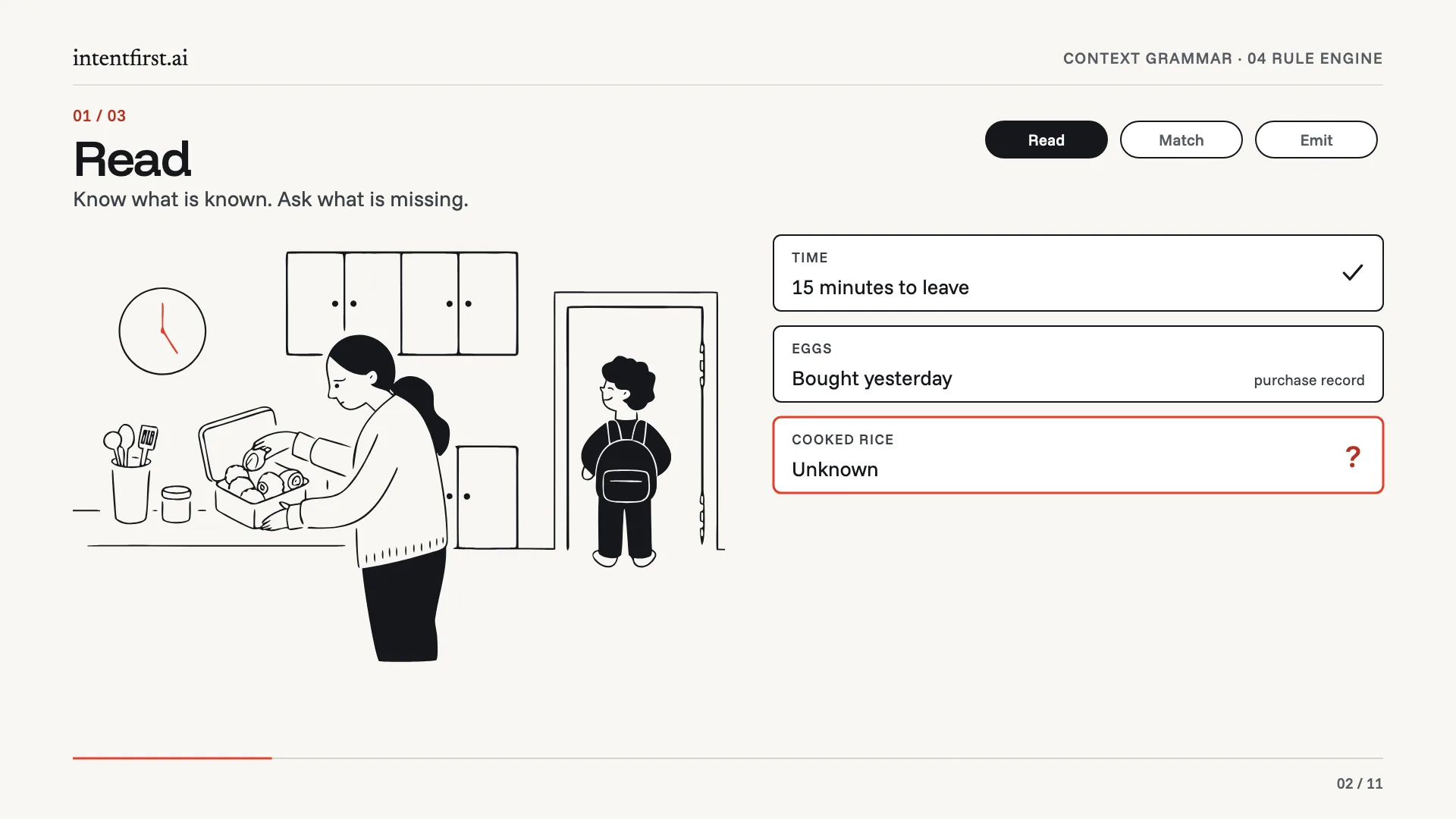
Now picture a school morning: fifteen minutes to pack a lunchbox and get out the door. The assistant checks ingredients, dietary restrictions, and preparation time. It knows you bought eggs yesterday, but it doesn't know if there is cooked rice left in the pot. So, it simply asks. That first step is Read: gathering what you said, checking existing records, and recognizing what is still unknown.
02 · Match
There is rice, about eight minutes left to cook, and a child’s dietary needs to respect. The assistant suggests rice balls and a rolled omelet. When time is short, you need one solid option, not a long comparison of recipes. This is Match: applying clear rules like "when time is short, choose a meal that can be ready on time." It makes the server's instinctive judgment explicit and dependable.
When rules meet
Spoken instructions are wonderful when your hands are busy cooking. But if the family is still asleep and you asked for quiet, speaking aloud is the last thing you want. A silent prompt on a nearby screen is much better. When rules pull in different directions, the engine resolves the tension: honoring boundaries, respecting house rules, and choosing the quietest, most sensible path forward.
03 · Emit
The plan is set: suggest rice balls and an omelet, keep the steps brief, and let the parent choose. Emit passes that decision to the interface. On a smartphone, it shows a clean checklist and an action button. On a distant kitchen screen, it renders large text you can easily read from across the room. The core instruction stays rock-solid, while its presentation adapts to the device in front of you.
Requirements before preferences
"Can we try a different flavor today?" The assistant can easily swap seasonings or side dishes. But it will never compromise on food allergies. Hard requirements come first, every single time. Personal preferences, taste, and variety come right after. Like a careful host, it stays completely flexible about your wishes while remaining unflinching about your safety.
The same rules, a new place
The lunchbox is packed, and you head out to the car. The detailed kitchen steps vanish. Shopping lists can wait until you arrive, rather than demanding your attention behind the wheel. Only urgent, time-sensitive alerts should gently interrupt. You don't have to rebuild your settings every time you move; the engine applies the exact same values to your new surroundings.
A guess is not an agreement
"You seem busy" is just an AI hunch—and hunches can be wrong. "Ask before buying" is a clear agreement you established. A floating guess about your mood must never rewrite a firm boundary. Given the same inputs and the same version of the rules, the rule decision arrives at the same conclusion. That deterministic consistency is what earns lasting trust.
Propose · Check · Present
When the assistant prepares tonight's grocery order, three systems work as one: the Rule Engine shapes the proposed action, the Negotiation Gate verifies permissions, and AX Patterns shape an editable review. To you, it feels like a single, seamless flow: review the proposed order, make a quick edit, and decide whether to place it.
One source, different views
At work, your immediate team might need granular research figures. Another stakeholder only needs the clear summary they are cleared to see. From a single source of truth, the system assembles the right view for the right audience. The rhythm is universal: gather the facts, apply the rules, and tell the interface what to present.
Read · Match · Emit
"Why this lunchbox today?" The answer is right there in plain sight: fifteen minutes until departure, and ingredients already at home. If the choice missed the mark, you can easily inspect the logic and adjust the rule. Read, Match, and Emit: understand the situation, apply the agreements, and deliver the right response. That is how intelligent assistance stays clear, accountable, and entirely yours.