Brain
English audio
Read transcript
Remember enough to make the next visit easier
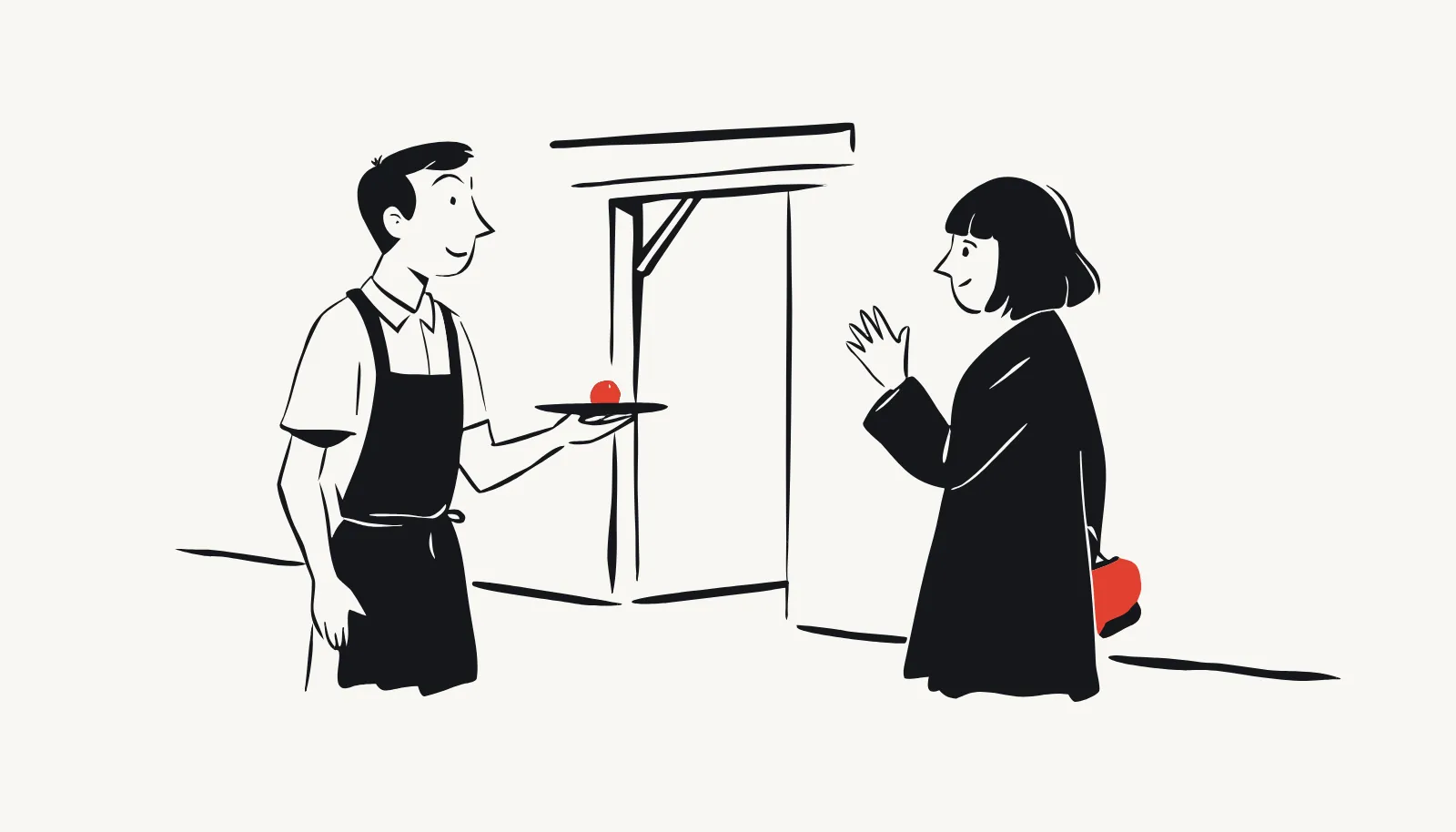
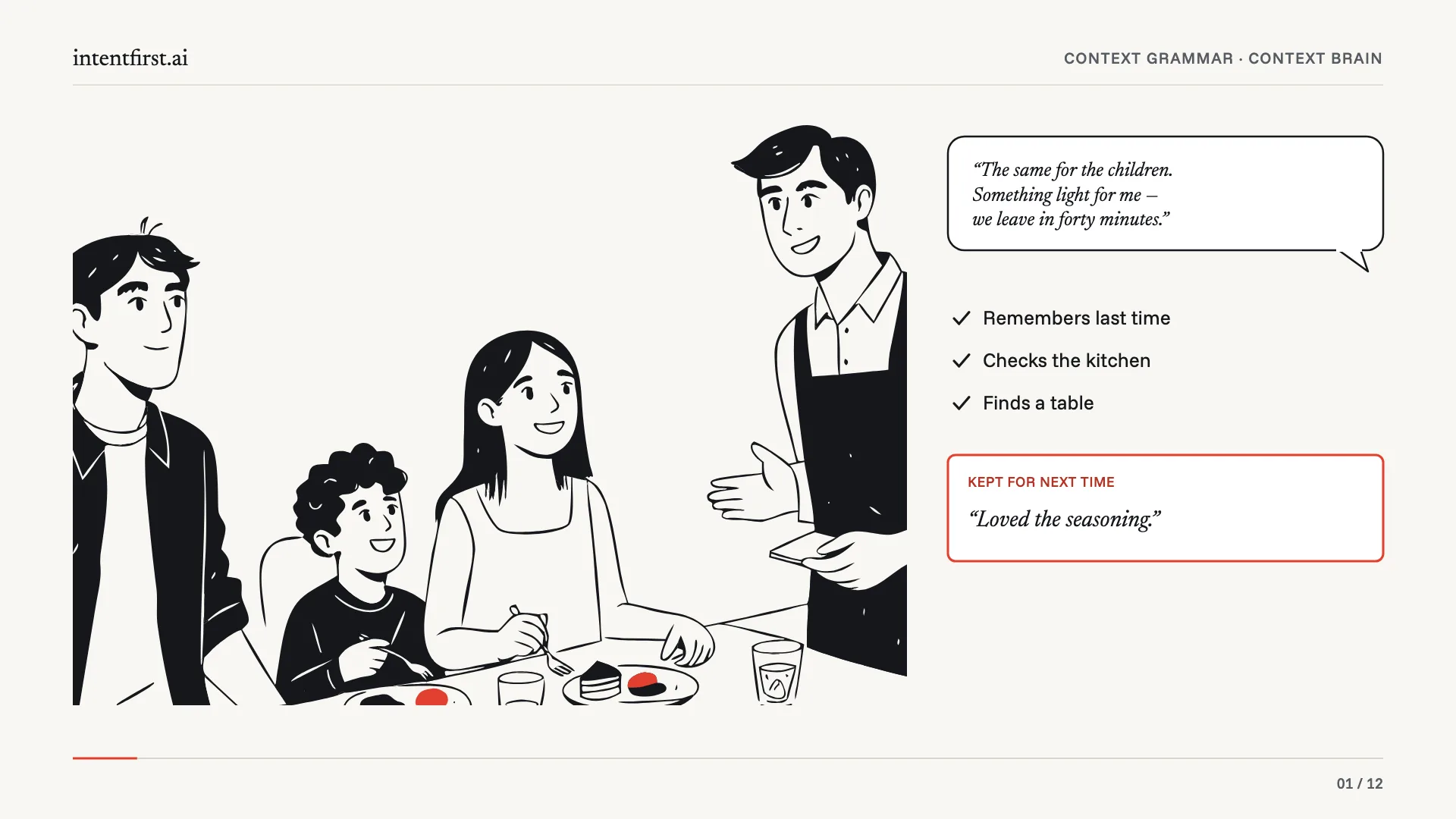
Today you bring your family to your usual restaurant. “The same for the children. Something light for me, and we need to leave in forty minutes.” The host remembers last time, checks what the kitchen can prepare, and finds a table. As you leave, you mention how much you liked the seasoning. Next time, that matters too. Preferences, experience, and today’s circumstances work together. Brain is a way to give AI that kind of useful memory.
Identity · Learning · Now
For a family trip, some things are established requirements, such as food restrictions. Others come from experience: an afternoon break made the last trip easier. And some are just today’s conditions, like rain. Brain separates these into Identity, Learning, and Now. Every Brain uses these three layers, so a temporary circumstance is not automatically mistaken for a lasting preference.
Different people. A plan that considers each of them.
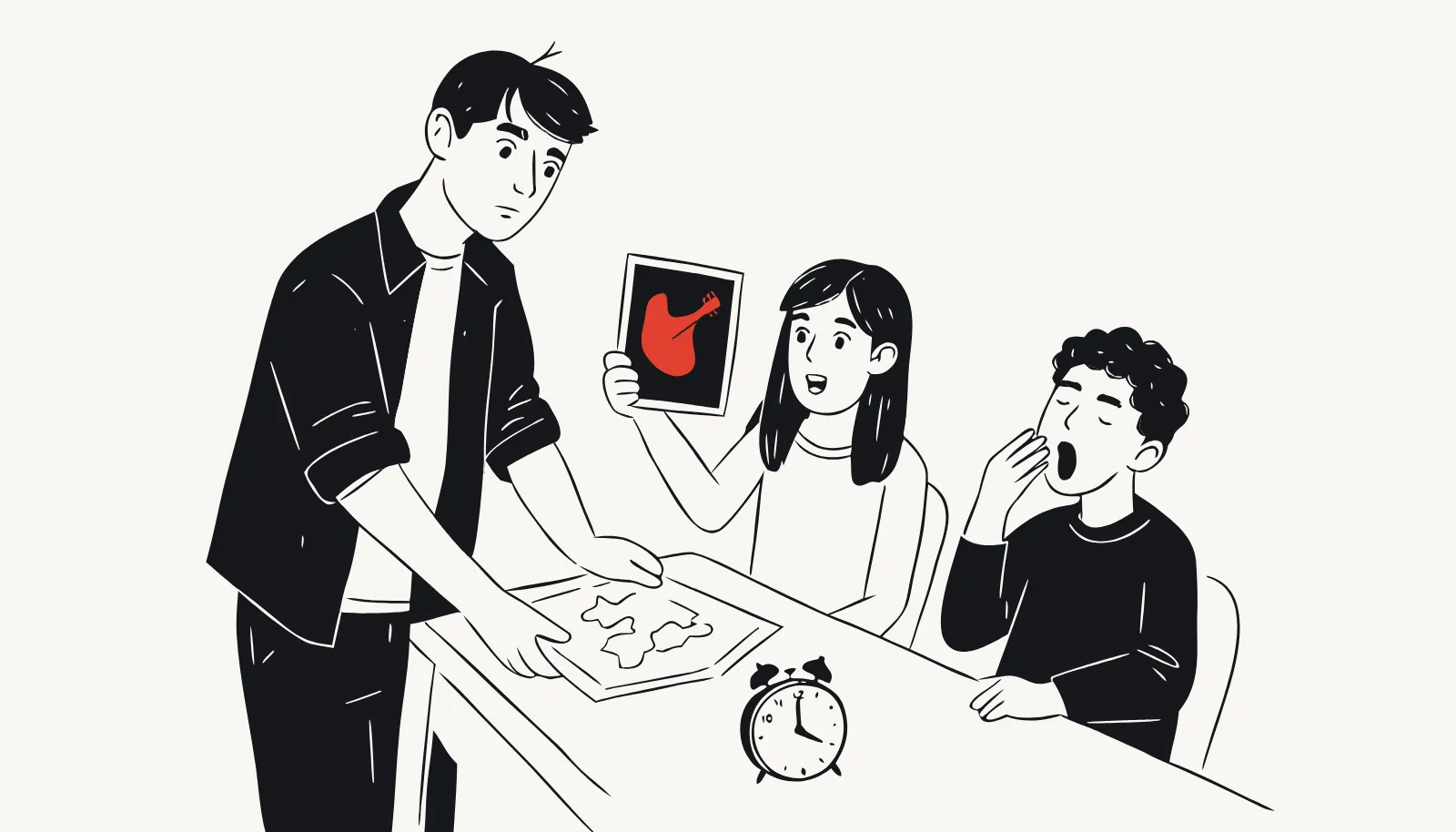
One child wants to see a concert. A parent wants an easy journey. The family has agreed to be back at the hotel by nine. Personal Brains retain individual needs; the Household Brain holds shared agreements. Domain Brains handle areas such as money and schedules. A Trip Brain, one kind of Event Brain, brings this journey together without turning everyone’s preferences into one average.
Brain remembers / Coordinator organizes / Agents act
A guestbook alone cannot serve dinner. Someone coordinates with the kitchen, someone cooks, and someone brings the meal. In this design, Brain holds the context, a Coordinator organizes the work, and Agents perform tasks such as searching for hotels or making an approved booking. Food and transport assistants can use the relevant family context without making you explain the same needs all over again.
What you told us before helps with today’s plan
“Let’s take a family trip this weekend.” The assistant brings together the children’s interests, journey times, the budget, and what you learned about taking a break. A workable day starts to emerge: enjoy the concert, rest along the way, and reach the hotel by nine. The value of multiple Brains is that things you explained separately can help shape one useful proposal. Missing details can still be checked with you.
The right context for each task
The hotel search needs the lodging budget for this trip, not the family’s entire financial history. A food search needs the relevant dietary requirements. Each task receives the information it is allowed to use, with a record of where it came from. Reading and changing are separate permissions: an assistant that reads a child’s preference should not silently rewrite it.
A shared plan, with current family context
A Trip Brain holds this journey’s dates, budget, and booking status. It refers to the relevant family information at its source instead of copying the whole household into a new file. If someone updates a food requirement before departure, the plan can check that current information. The transport and food assistants also work from the same current itinerary.
Control Tower · Work together / Field Relay · Pass the result on
Hotel and transport searches can run alongside each other, using the same trip context. The framework calls that coordinated pattern Control Tower. Other tasks depend on a result: once a hotel is chosen, the next assistant works out the route to its station. That handoff is Field Relay. Both patterns reduce the work of copying information and briefing the next assistant yourself.
Plan → Experience → Review → Remember
On the trip, you discover that an afternoon break helps, and a child finds a new favorite dish. Afterward, the assistant asks which lessons you want remembered for next time. Reviewed learning returns to the appropriate personal or family Brain. The active trip and its temporary screens can close while selected records remain. The next journey begins with useful experience, rather than another blank form.
Several Brains help Maya make one decision
At work, Maya is considering a new project. She needs customer evidence, the brand’s principles, and a realistic view of team capacity. Research, Brand, and Org Brains hold those different kinds of context. With a Project Master Brain supporting the proposal, she can start from relevant knowledge instead of searching from scratch. Once Maya approves the work, a Project Brain carries its agreed purpose and evidence forward.
Carry useful learning into the next project
After the project, the team learns which explanation helped customers understand the product. Reviewed, shareable learning can enter a common archive for the next team to use. That does not open every project file to everyone else. Research keeps its source, and each new project receives the parts it is allowed to use. Useful experience travels without removing the boundaries around each team’s work.
Remember what matters. Bring it together when needed.
Across a home or workplace, there is shared context, personal or brand context, specialist knowledge, a coordinating role, and temporary work such as a trip or project. Those are five roles, distinct from the three layers inside each Brain. Like a host who remembers the meal you enjoyed, AI can connect what you have already explained to the help you need now.