Context Grammar — Floor 3

Brain

Memory has structure. There are three layers — not one flat list. And in a home, there are five Brains. This is how agentic AI remembers.

Context Brain

The restaurant that remembers you

Walk into your regular restaurant. The owner already knows your name. Your seat preference. Your nut allergy. That is Layer 1 — the unchanging foundation.

Your waiter remembers you order a beer on Fridays. That you ask for lighter food when you look tired. That you always add lemon to fish. That is Layer 2 — patterns built from repetition.

Tonight, they can see you came with your boss. You're wearing a suit. There is a trace of tension. That is Layer 3 — what is happening right now.

Three different kinds of knowing. Three different update speeds. One seamless experience.

Current AI does not have this structure. Claude, Gemini, ChatGPT — their memory is a flat notepad. A list of facts with no layers, no update cycles, no architecture. Context Brain gives it structure.
Universal Anatomy

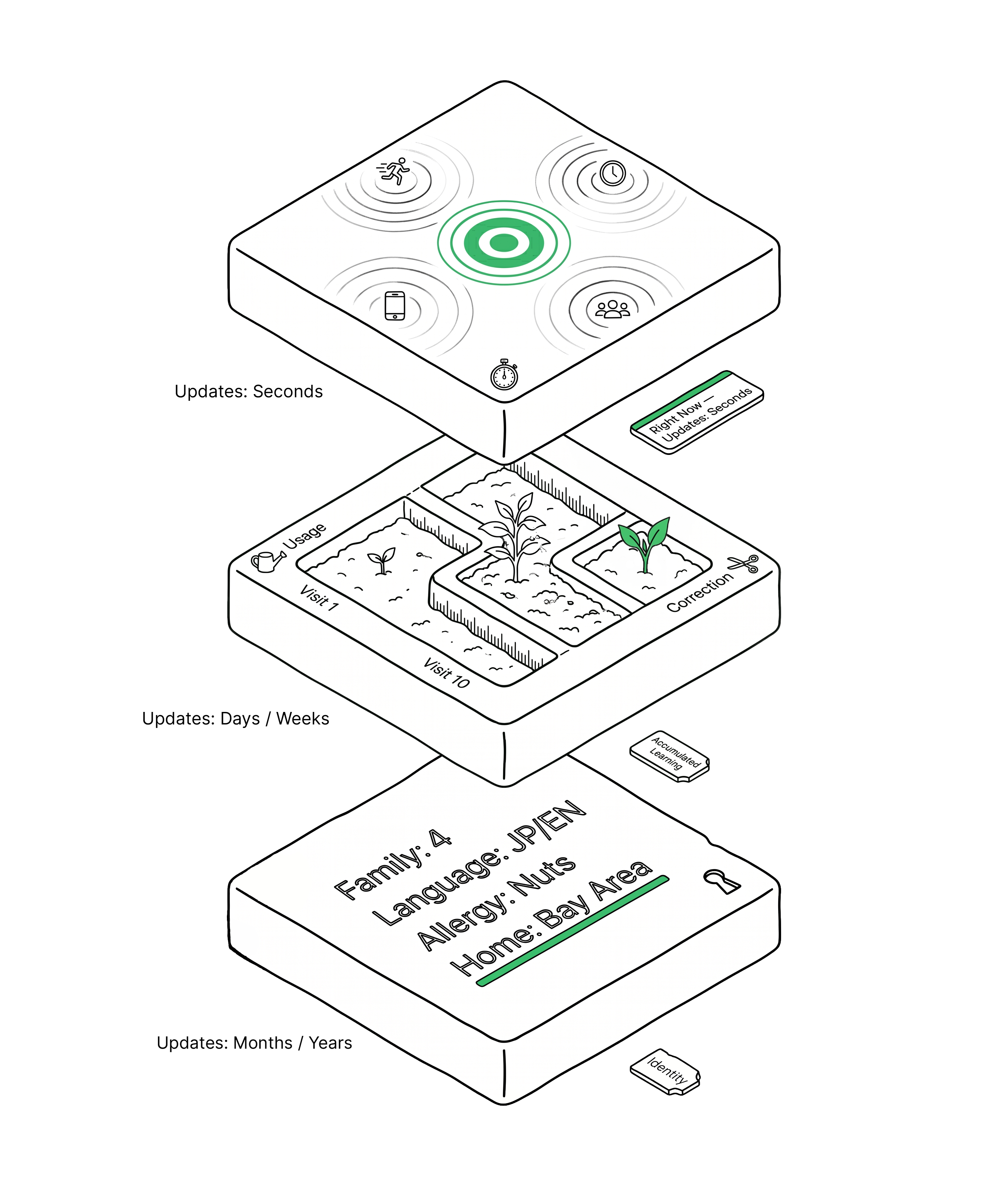
Every Brain has three layers

Person Brain, Finance Brain, Household Brain, Event Brain — all share the same three-layer structure. This is the universal anatomy of memory.

Context Brain three layers — Identity (months), Accumulated Learning (weeks), Right Now (seconds)

L3

Right Now

The waiter's observation

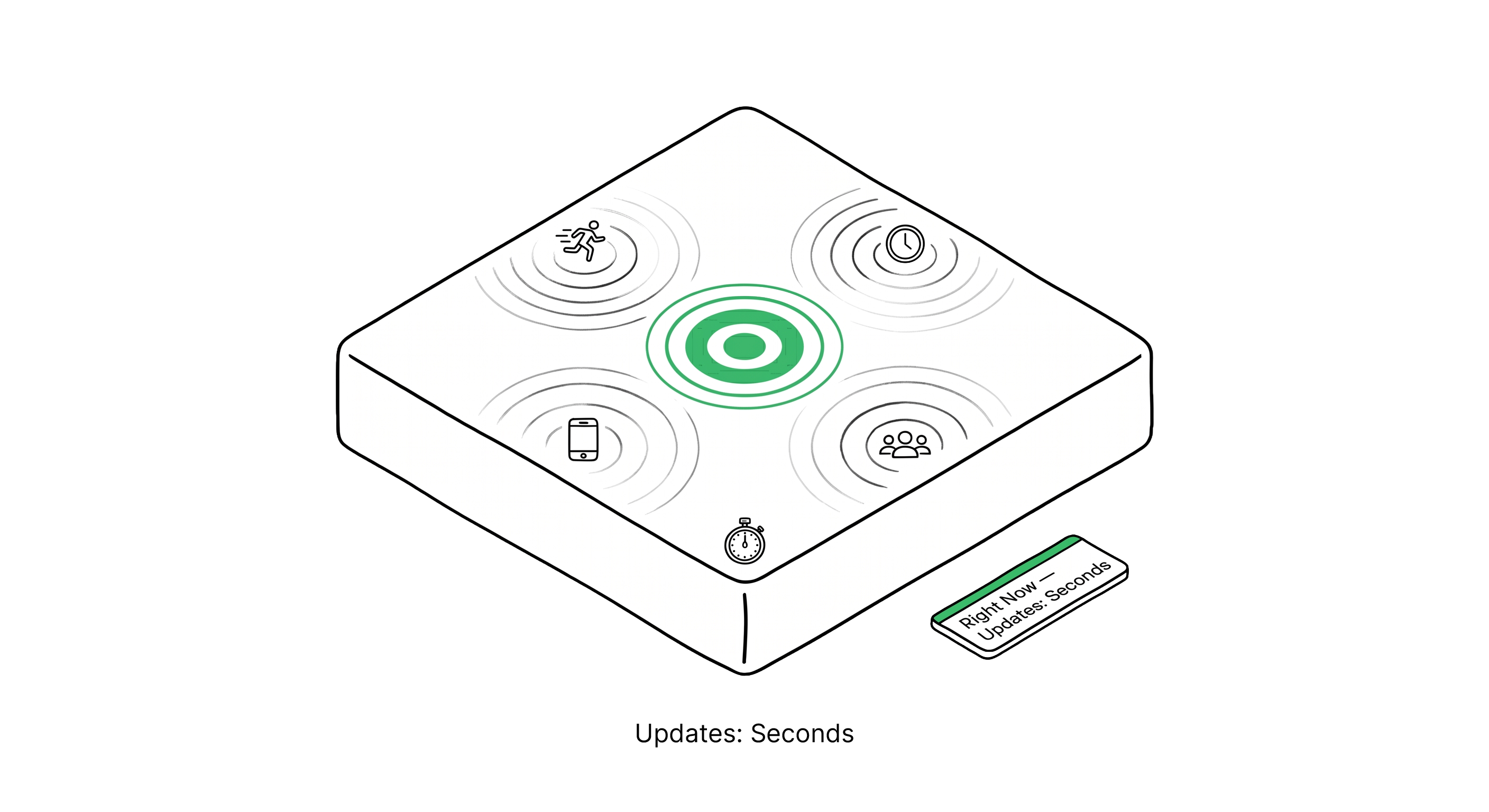
"They are rushing tonight." "They brought a child." Current Token values flow into this layer in real time — rewritten every second.

Update: seconds

L2

Accumulated Learning

The waiter's memory

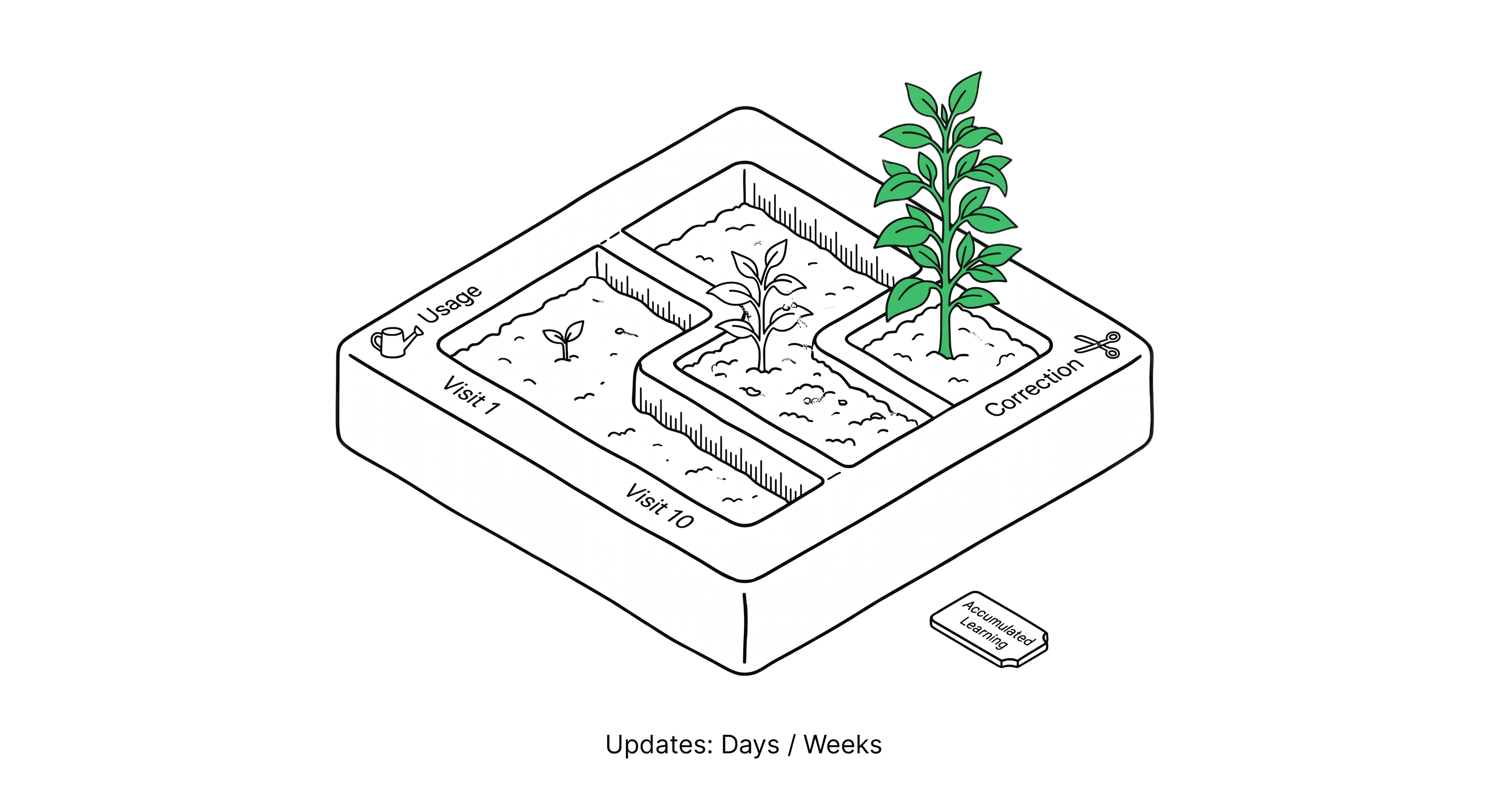
"Tired on Fridays." "Wine when wife is present, beer alone." Patterns that sharpen with each interaction and adjust with corrections.

Update: days / weeks

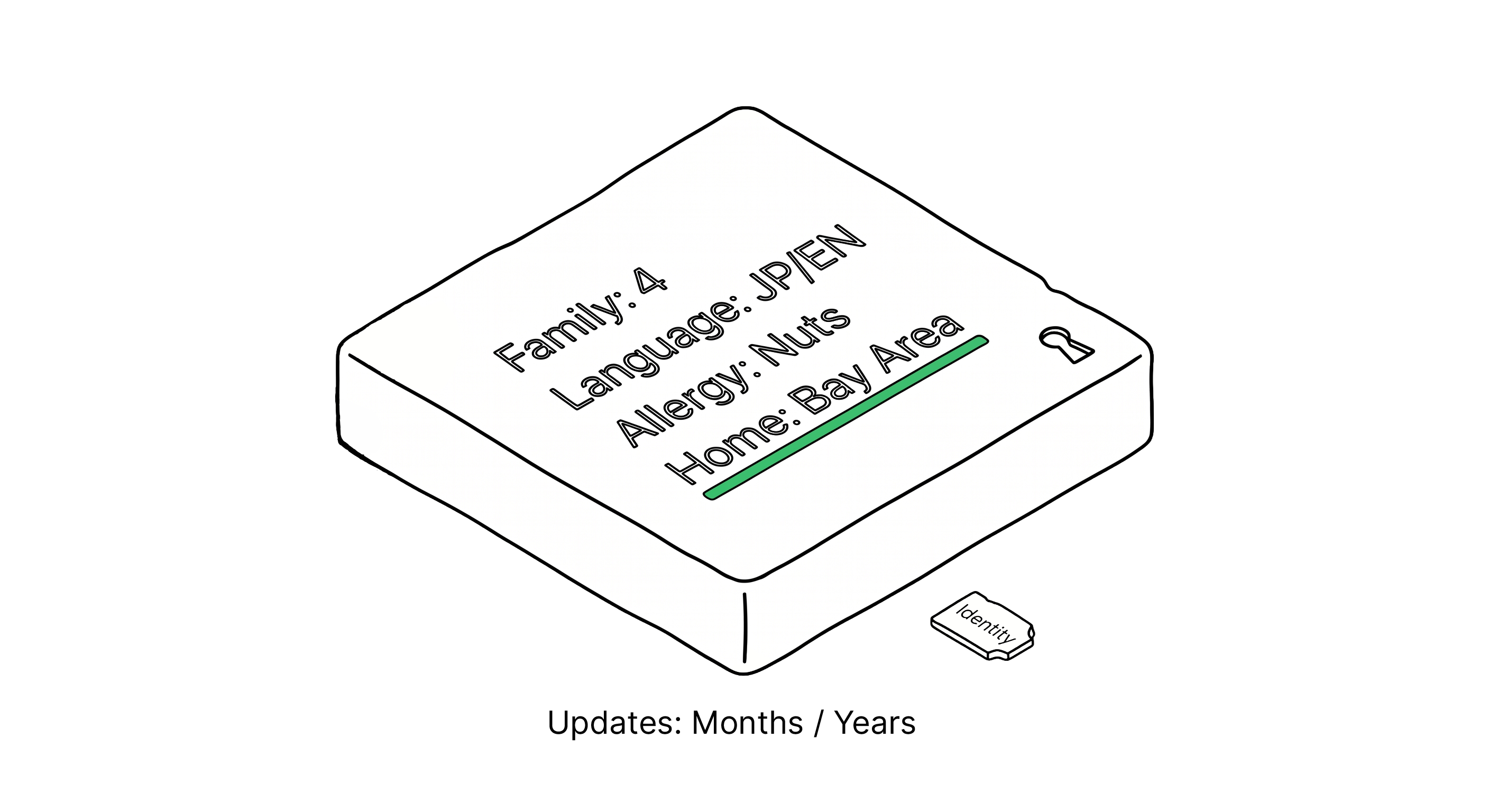
L1

Identity

The reservation book

Family structure, allergies, language settings — the bedrock that rarely changes. Written once, referenced every visit.

Update: months / years

Identity Layer — the permanent foundation

Layer 01 · Identity · in every brain

Months to Years

Identity Layer — Who This Brain Is

Demographics, family structure, dietary restrictions, language, accessibility — the bedrock that defines the shape of a life, not the texture of a day. For a Domain Brain, it is the unchanging rules of that domain. For a Brand Brain, it is judgment DNA.

Layer 01 · Identity · in every brain Identity Layer — The Unchanging Foundation Months · Years

For a Person Brain: demographics, family structure, dietary restrictions, language. For a Domain Brain: the immutable rules of that domain. "What this Brain is" — determined here.

What it holds Person Brain → family structure, dietary restrictions, language, accessibility.
Finance Brain → currency, tax rules, account structure.
Household Brain → house rules, shared assets.
Source Explicit user input + onboarding + official settings
Update speed Months to years — updated at life milestones

In restaurant terms

"Nut allergy. Window seat. Two children. Anniversary in March."

The reservation book. Written once at the first visit. Read before every meal — no one has to ask again.

Key Insight

The thickness of this layer is controlled by the Disclosure Dial. Full disclosure gives the system a complete identity. Hidden mode gives it a name and nothing else. Different opening levels can be set per Person Brain and per Domain Brain. The user decides.

Learning Layer — patterns accumulate over time

Layer 02 · Learning · in every brain

Days to Weeks

Learning Layer — What Accumulates

The layer that earns trust — or loses it. Each Brain accumulates its own specialized learning in its own domain: Person Brain learns behavioral patterns, Finance Brain learns spending tendencies, Calendar Brain learns schedule density by day of week.

Layer 02 · Learning · in every brain Learning Layer — Patterns from Repetition Days · Weeks

Starts from raw facts and graduates to contextual understanding. The system watches, correlates, and builds a behavioral model — one that sharpens with each interaction and adjusts with corrections.

What it holds Person Brain → food preferences, shopping habits, communication style.
Finance Brain → monthly spending patterns, category thresholds.
Calendar Brain → schedule density by day of week.
Source Implicit learning from actions + user correction feedback
How it evolves Visit 1: ordered salmon (fact).
Visit 3: probably likes salmon (pattern).
Visit 10: tired on Fridays, wants something light + beer (contextual).
Visit 20: wine when wife is present, beer when alone (relational).

In restaurant terms

The waiter who has served you twenty times knows you order beer on Fridays and wine when your wife joins. Nothing written down — built from repetition, refined through correction. Sometimes wrong, but getting better.

Key Insight

The Learning Layer can learn wrong patterns. Ordered salmon three times — but it was for guests, not personal preference. Correction feedback adjusts the trajectory. Persistent errors trigger Autonomy Dial demotion — the system reduces its confidence and asks more, assumes less.

Now Layer — live context, seconds-level updates

Layer 03 · Now · in every brain

Seconds to Minutes

Now Layer — What's Happening Right Now

The fastest layer. The one that breathes. Real-time Token values, active intent, device state. It changes with every context switch, every sensor reading, every new piece of information entering the frame. This layer exists in every Brain — Finance Brain (current balance), Calendar Brain (today's schedule density), Event Brain (current location in Kyoto).

Layer 03 · Now · in every brain Now Layer — The Real-Time Feed Seconds · Minutes

The fastest layer. The one that breathes. Current Token values, active intent, device state — rewritten by the second as new information enters the frame.

What it holds Current values of the 8 Context Tokens (Physical State, Cognitive Load, Social Exposure, Priority Weight, Form Factor, Feasibility, Autonomy Dial, Disclosure Dial), active intent, device state
Source Sensor data + active session context
Update speed Seconds to minutes

In restaurant terms

"They are rushing tonight." "They brought a child." "Something feels off."

The waiter reads the room — pace, expression, company. No history needed. Just open eyes, right now.

Key Insight

The Now Layer is where the 8 Context Tokens live. Physical State, Cognitive Load, Social Exposure, Priority Weight, Form Factor, Feasibility, Autonomy Dial, Disclosure Dial — all feeding their current values into this layer. This is the real-time pulse of every Brain. See each token in detail →

Architecture

Five Home Brains

One Brain holds one person's memory. A home has five — each with its own role, each with the same three-layer anatomy.

Brain 01
Household Brain
The household's rules, shared assets, and judgment DNA. "Kids' essentials under $50 → silent buy." Persistent foundation.
Brain 02
Person Brain × 5
Individual memory for each family member. Mai / Ren / Sota / Mio / Grandpa — each fully independent from the others.
Brain 03
Domain Brain × N
Specialist knowledge by domain. Finance / Education / Health / Calendar — roughly five Domain Brains running in parallel for a family.
Brain 04
Household Coordinator
The conductor. Reads across all Brains to decide which Agent acts. This is a Coordinator node, not a Brain — it holds no memory of its own.
Brain 05
Event Brain × N
Time-limited purpose. Kyoto Trip / House Move / Exam prep — dissolves when the purpose ends. Only its learnings return to Home Brain.

Core rule

Layer = universal memory anatomy. Present in every Brain. Brain = a memory entity that owns three layers. Individual = 1 Brain. Household = 5 Brains. Enterprise = many Brains (distributed cognition). The correct framing is "N Brains × three layers each" — not "1 Brain × 3 layers."

The Foundation

Brain is memory.
Agent is action.
Coordinator is the conductor.

Many people conflate "Finance Brain" with "Finance Agent." They are entirely different things — about as different as a library and a librarian. Three kinds of nodes work together to make an agentic OS possible.

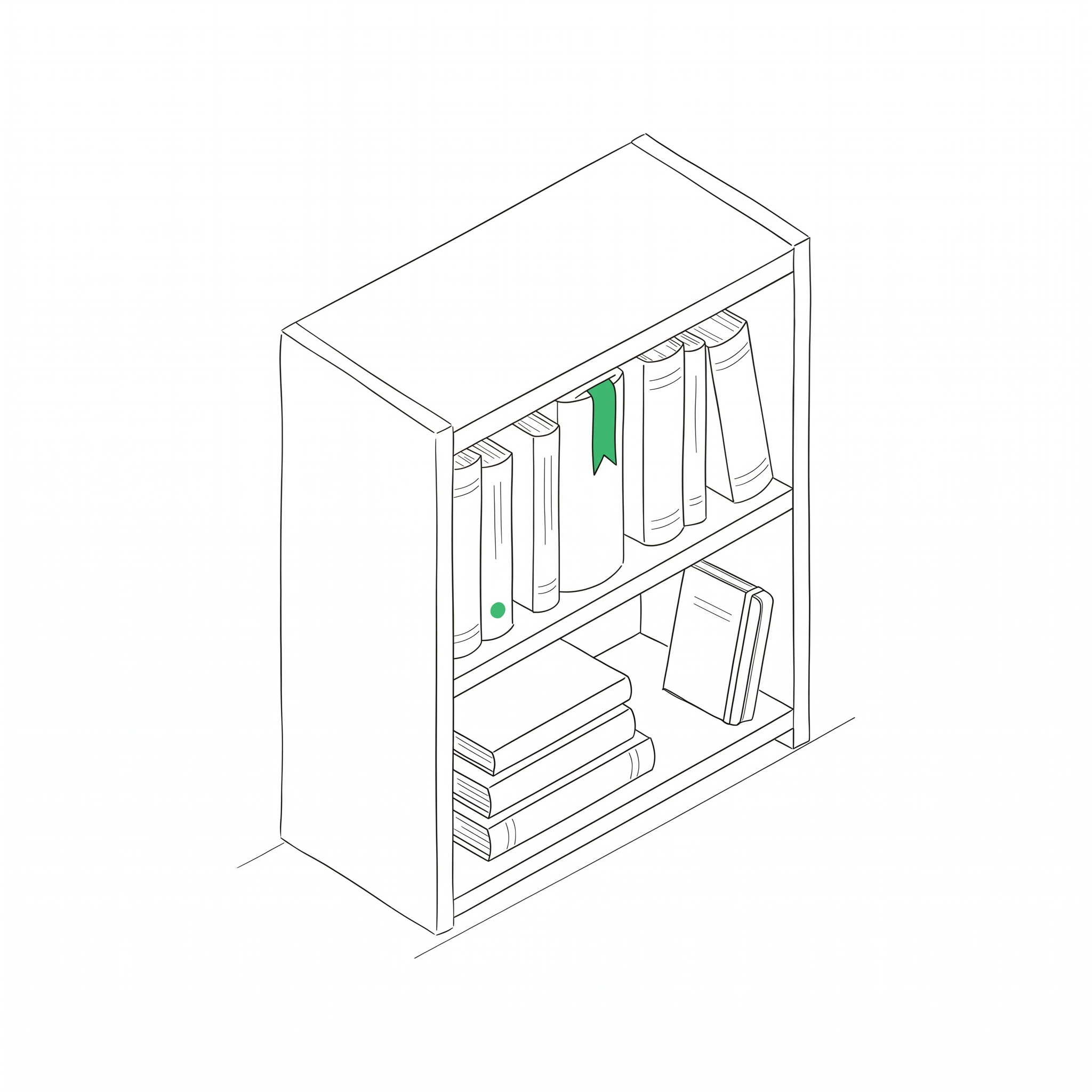
Brain — a quiet bookshelf with one green bookmark on a single book; the archive of memory
Brain
Memory

The place that holds information. It does nothing on its own. Read it and it answers. Write to it and it remembers. That is its only job.

  • Remembers family allergies
  • Accumulates 11 months of Monday patterns
  • Holds rules about who can access what
  • "Not forgetting" is its job
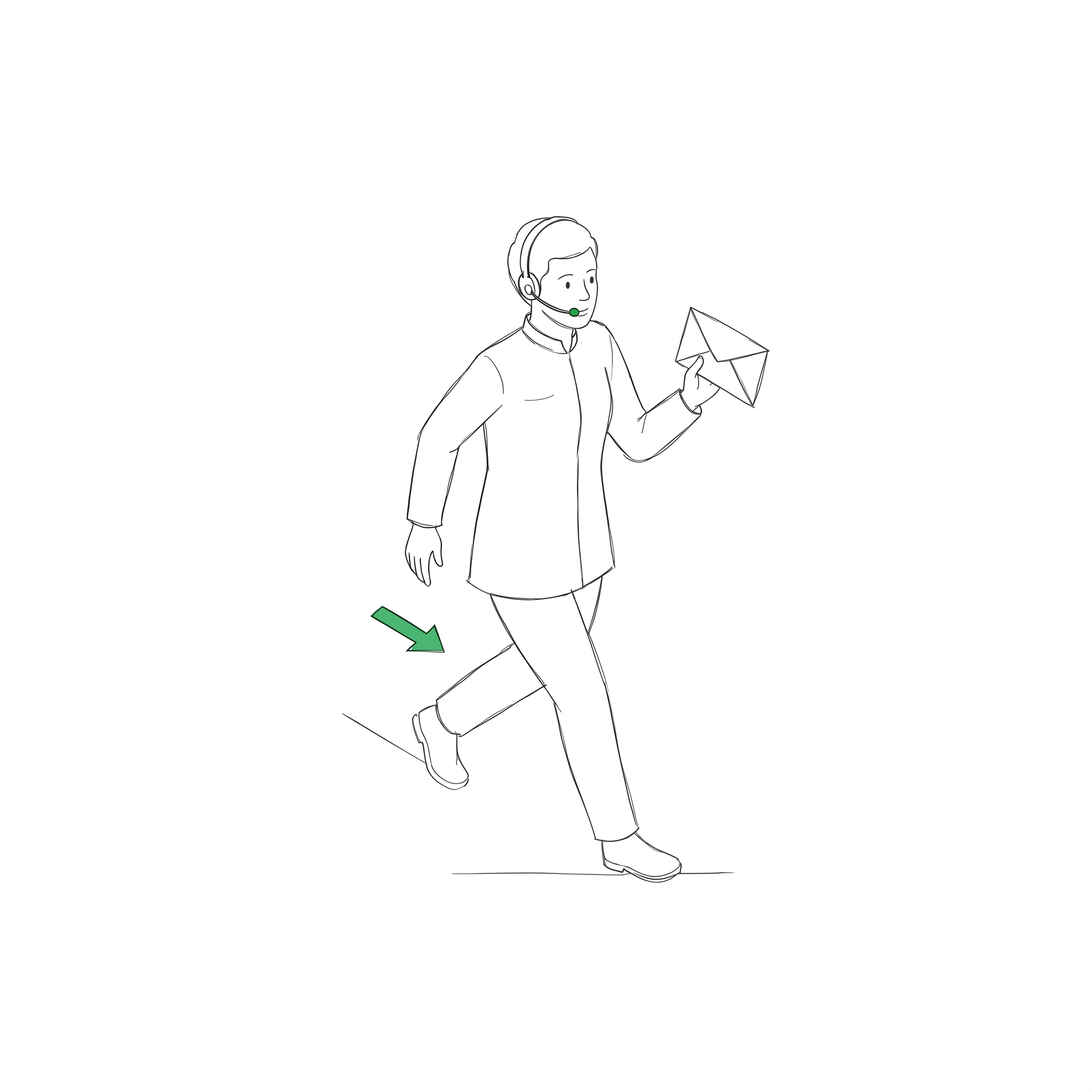
Agent — a courier figure with headset and envelope mid-stride, a small green forward arrow indicating action in motion
Agent
Actor

The AI that talks to people, makes decisions, takes action. It reads from Brain to decide, then writes back what it learned.

  • Answers "Should I buy this?"
  • Places a shoe order on Amazon
  • Sends notifications, writes emails
  • "Moving" is its job
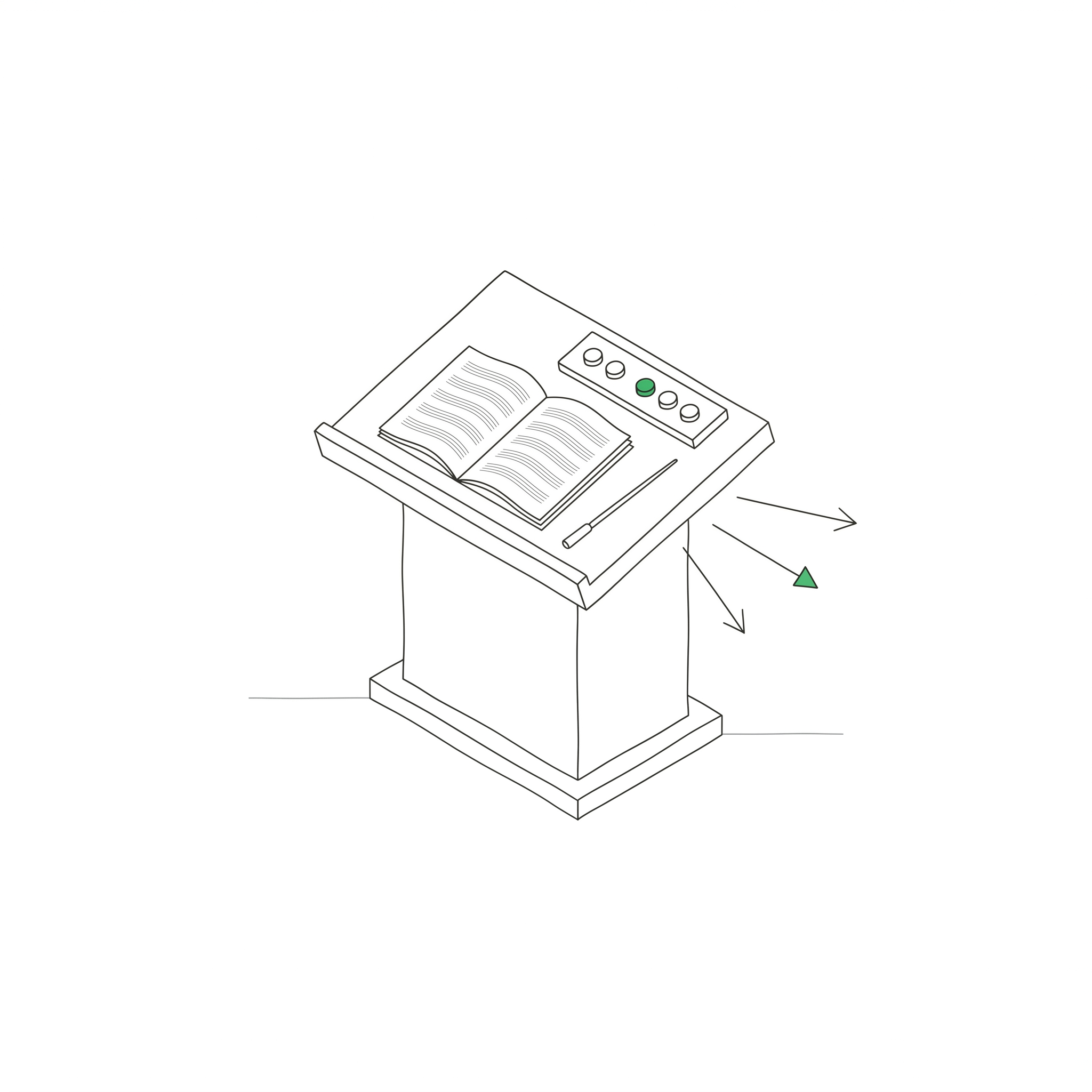
Coordinator — a podium with an open conductor's score and a small console; one green-active button and three fan-out arrows showing dispatch
Coordinator
Conductor

Reads across multiple Brains simultaneously and decides which Agent does what. One Coordinator is enough for a household.

  • References all five Brains at once
  • Resolves competing priorities
  • Issues commands to Agents
  • "Reading across and deciding" is its job

Memory aid

Brain is a noun — memory as a thing. Agent is a verb — the one who uses memory to act. Coordinator is a conductor — the one who decides who reads what and who acts.

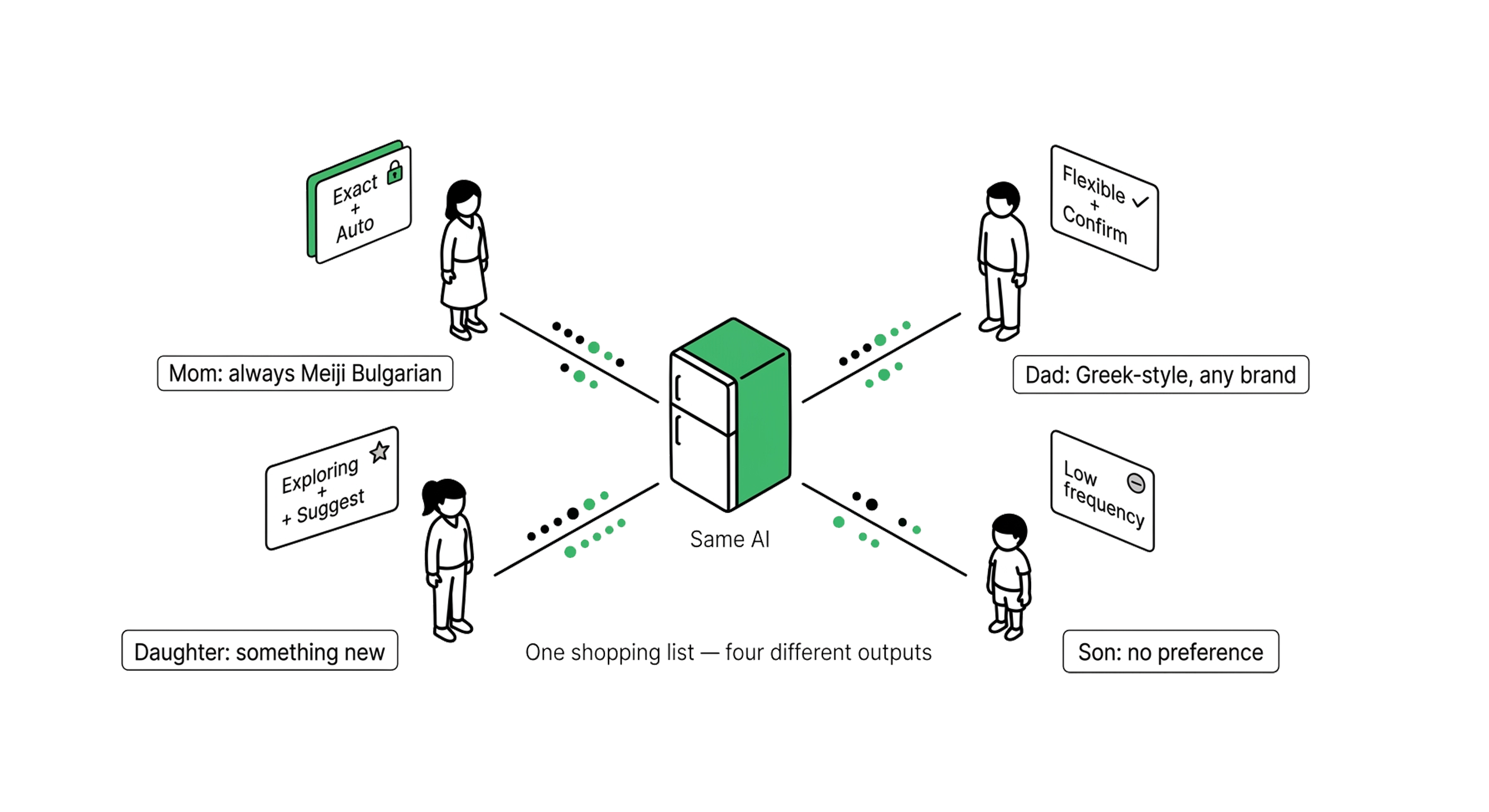
Multi-Person Orchestration — one AI, four different rule sets

One AI, four rule sets

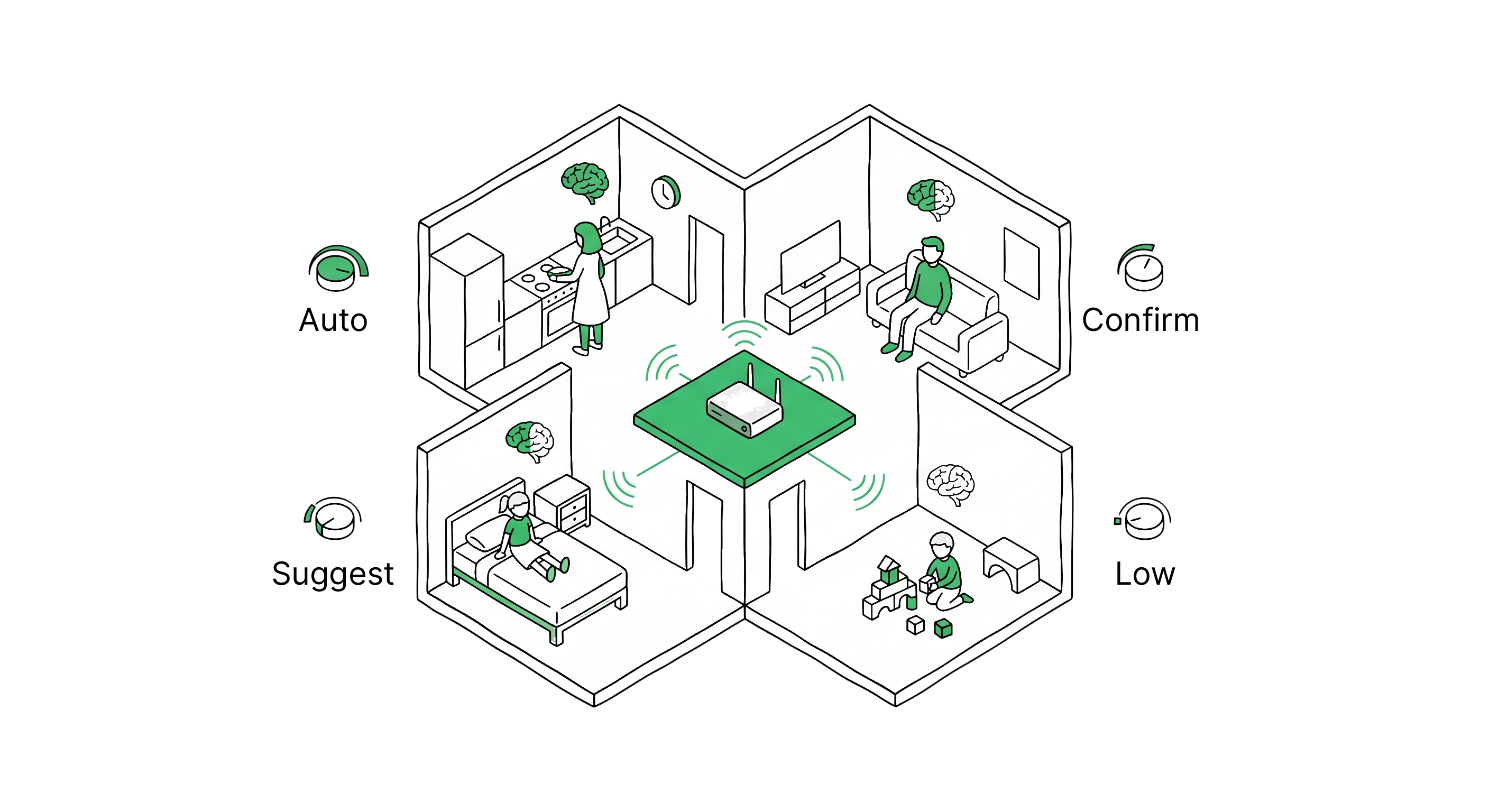
The same Coordinator, the same Household Brain — but each Person Brain holds different Autonomy Dial settings and Substitution Modes. One AI serving four people simultaneously, each on their own terms.

Multi-Person Brain — one Coordinator holding separate token states for each family member simultaneously

One Brain, four parallel states

The Coordinator reads each Person Brain independently. When rules collide — Mom wants the exact yogurt, the store is out — it knows whose preference wins.

Worked Example

Sota's $48 shoes — five Brains working at once

A routine family moment. Let's trace how much memory is mobilized by a single sentence from an 11-year-old.

"Mom, my soccer shoes are too tight!"

Sota, age 11 · Soccer team · A Tuesday morning

1 Sota speaks Voice Agent
Sota says it at breakfast. The Voice Agent hears the conversation and passes "shoes too tight" to the Coordinator.
2 Coordinator reads five Brains — in under one second Coordinator
The Coordinator needs to answer "Should Sota's shoes be ordered now?" It reads all five Brains simultaneously.

Brains return answers

  • Person Brain (Sota) Age 11 · soccer Tuesday mandatory · current foot size EU 36 (up 5mm recently)
  • Finance Brain Remaining budget this month $230 · "kids' essentials" envelope $150 remaining · under $50 = auto-approve
  • Education Brain School dress code OK · PE class requires athletic shoes
  • Calendar Brain Match next Saturday · urgent
  • Household Brain House rule: "kids' essentials under $50 → silent buy, log only"
→ Verdict: SILENT BUY (auto-approve, log only)
3 Shopping Agent places the order Agent
Coordinator instructs the Shopping Agent. The Shopping Agent orders Sota's team-specified brand in the right size on Amazon. $48 + same-day delivery = done.
4 Brains learn — the Agent writes back Brains
Once the action completes, the Agent writes what it learned back to the relevant Brains.
  • Finance BrainRecords $48 kids' essentials spend, updates monthly budget (Learning Layer)
  • Person Brain (Sota)Updates foot size to EU 36 in Identity Layer
  • Household BrainRecords that "silent buy" rule fired correctly — Learning Layer
5 Mai sees a report on her iPhone Result
Mai makes zero decisions. She gets a post-hoc report only.
"Sota's soccer shoes ordered. Auto-approved. $48. — Tap to undo."

This is Silent Resolution. Mai is freed from the morning decision gauntlet.

What just happened

One sentence from Sota activated five Brains, one Coordinator, and three Agents (Voice / Shopping / Notification). Nobody needed programming knowledge. The family just talked normally.

Brain ↔ Agent — not one-to-one

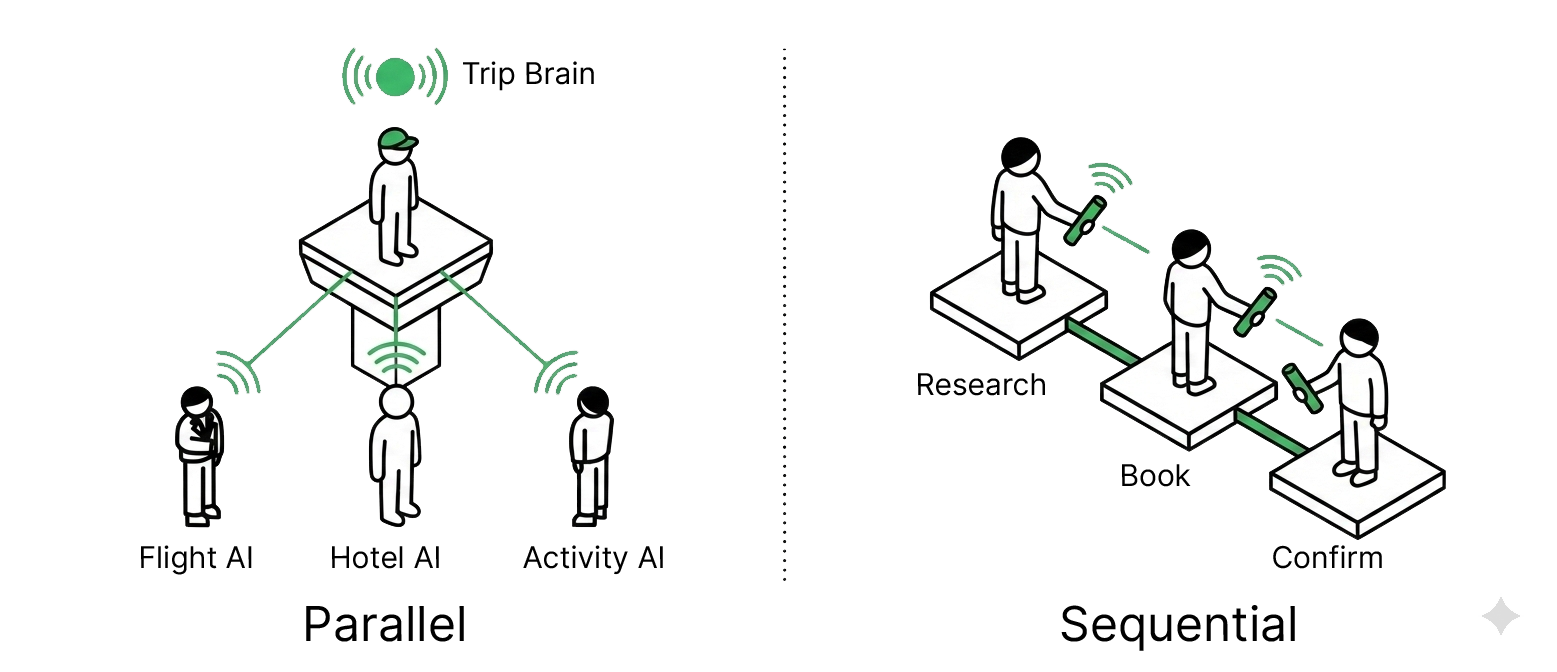
One Brain can be read by multiple Agents. One Agent can read from multiple Brains. This is the correct model.

Isometric diagram showing Control Tower (parallel) and Field Relay (sequential) multi-agent orchestration models

Three patterns happening simultaneously

① One Brain (Person Brain) is read by multiple Agents
② One Coordinator reads multiple Brains
③ Agent writes back to Brain when done (memory update)

Lifecycle

Disposable Brain

Born for a purpose. Dissolved when it ends. The lessons survive.

Not everything should persist forever. A family trip to Kyoto does not need permanent shelf space in your AI's memory. But the lessons from that trip — those should survive.

An Event Brain is a time-limited memory instance with a clear lifecycle. It has the same three-layer anatomy as every other Brain. See it applied in Project 02: The Family Trip →

Concept · Trip Brain Lifecycle Four phases: Born (inherits Identity Layer), Learns (all 3 layers fill), Returns (knowledge flows to Home Brain), Dies (container dissolves, memory persists).

01

Birth

The Trip Brain inherits from all five Home Brains: family allergies, preferences, past travel patterns. It arrives pre-loaded, not blank.

02

Learn

Builds its own Learning Layer during the trip. "Kai discovered ramen." "Mia crashes at 3pm." Insights that only exist inside this context.

03

Return

Valuable learnings flow back to Home Brain. "Kai likes ramen" becomes permanent in Person Brain (Kai) Learning Layer.

04

Dissolve

The Event Brain and its UI disappear. Plans are disposable. Memories are permanent. The context ends, but the wisdom stays.

Beyond trips — any time-limited purpose

Any temporary purpose can spawn an Event Brain. When the purpose ends, the Brain dissolves — but its learnings return to Home Brain.

Event Brain Identity Layer parameters What it learns
Kyoto Trip Dates, family size, budget, dietary restrictions Kids' stamina patterns, favorite cuisine genres
Moving House New address, move-in date, floor plan Room usage habits, neighborhood routines
Hurricane Response Alert level, evacuation zone, supply status Evacuation decision criteria, family rally patterns
Product Launch Deadline, team, deliverables Bottleneck patterns, ideal meeting length
Daughter's Exams Test dates, target schools, subjects Focus time windows, stress signals

Oxygen

Memory is frozen.
"Now Layer" thaws it.

Until the Now Layer flows in, Identity and Learning are static data. The moment "now" arrives, knowledge comes alive and action becomes possible. This principle applies to every Brain — all five.

Before — data only

Identity + Learning

"Egg allergy" (Person Brain · Identity) + "Tired on Fridays" (Person Brain · Learning) = just data. The AI cannot act on this alone.

After — + Now Layer

Identity + Learning + Now

+ "Tuesday 6:30pm, wife is in the kitchen, pasta and broccoli in the fridge, 25 minutes until dinner" (Person Brain · Now)

= "Egg-free pasta, 20 minutes, using what's in the fridge. Shall I proceed?"

Memory is raw material. It becomes judgment only when crossed with right now.

What's different from existing AI memory?

Gemini, Apple Intelligence, Claude — all of them remember your allergies, your routines, your preferences. The difference: none of them act on that memory in this exact moment. Memory is raw material. Judgment only emerges when memory is crossed with right now. That is what the Context Brain architecture delivers — and what flat memory lists cannot.

Scale Model

Five tiers. Any scale.

From a single individual to a household to an enterprise — the same five tiers describe every case. What changes is only the value of N. Layers stay at three. Brain tiers stay at five.

Tier Role Individual (1) Family (5) Startup (30) Enterprise (1000+)
1 Persistent foundation Self Brain Household Brain Org Brain Org Brain
2 Judgment DNA Person × 5 Person × 30 / Brand × 1 Brand × N (multi-product, regional)
3 Specialist knowledge Health / Money / Schedule Domain × 5 (Finance / Edu / Health / Cal / Home) Function × 3–4 (Ops / Customer / Finance) Function × 8–12 (Legal / HR / Finance / Marketing / Engineering / Customer…)
4 Conductor (your own mind) Household Coordinator Project Master Brain PMB hierarchy
5 Time-limited execution Trip / Move Event × N Project × few Project × many

Key point

Five tiers are constant — N is what changes. A family has 5 Domain Brains. An enterprise has 12 Function Brains. But "specialist knowledge distributed across parallel Brains" is the same structure at every scale.
Agents are a separate variable layer. A startup runs 3 Agents in dual roles. An enterprise runs 12 dedicated Agents. Layers stay fixed at three.

Common questions answered

Common questions answered

Brain, Agent, Coordinator — five Home Brains — three-layer anatomy. Six questions that come up every time.

Q1. Do Brain and Agent need to share the same name?

No. "Finance Brain" and "Finance Agent" share a name for clarity, but they are different things. One Finance Brain can be shared by three Agents (Shopping / Tax / Budget). Conversely, one Calendar Agent can read from five Brains (Finance / Education / Health / Calendar / Household). This is normal and expected.

Q2. Does Brain alone make AI work?

No. Brain is a bookshelf. Without someone to read it (Agent) and someone to decide who reads what (Coordinator), it has no effect. Conversely, Agent alone means no shared memory — every session starts from zero. All three are required.

Q3. Can an Agent write directly to a Brain?

Yes — within its permission scope. The Disclosure Dial and Disclosure Matrix determine which Agent can write to which Brain and how deeply. A Finance Agent has full access to Finance Brain but cannot write to Person Brain (privacy boundary). This is what "5 × 5 = 25 access rules" means in Project 01.

Q4. Is there only one Coordinator?

At household scale, one Coordinator is sufficient. At enterprise scale, a Coordinator hierarchy becomes necessary (department Coordinator → company-wide Coordinator). The essential requirement is one or more "reads across and decides" roles.

Q5. How is this different from existing AI?

ChatGPT / Claude are Agent-only models (memory is internal and closed). Apple Intelligence / Samsung Family Hub are some Brain + dedicated Agent models (family profiles, etc.).
What Context Grammar proposes is a distributed multi-Brain × separate-layer specialist Agent × Coordinator three-tier structure. This is the architecture that makes "agentic OS" real.

Q6. Do all three layers truly exist in every Brain?

Yes, always. Person Brain (Sota): "age 11 · soccer" (Identity) · "recently growing fast" (Learning) · "shoes too tight this morning" (Now). Finance Brain: "currency USD" (Identity) · "eating out more this month" (Learning) · "balance $230" (Now). Even Event Brain (Kyoto Trip): "dates · family size" (Identity) · "Kai likes ramen" (Learning) · "currently at Kyoto Station" (Now). Layer is universal memory anatomy.

Memory without trust controls is surveillance.

Context Brain is the memory architecture. Trust Design is the control layer. Together, they let AI act on your behalf.

← Back to Overview